
What Does Active Under Contract Mean?
7 min read
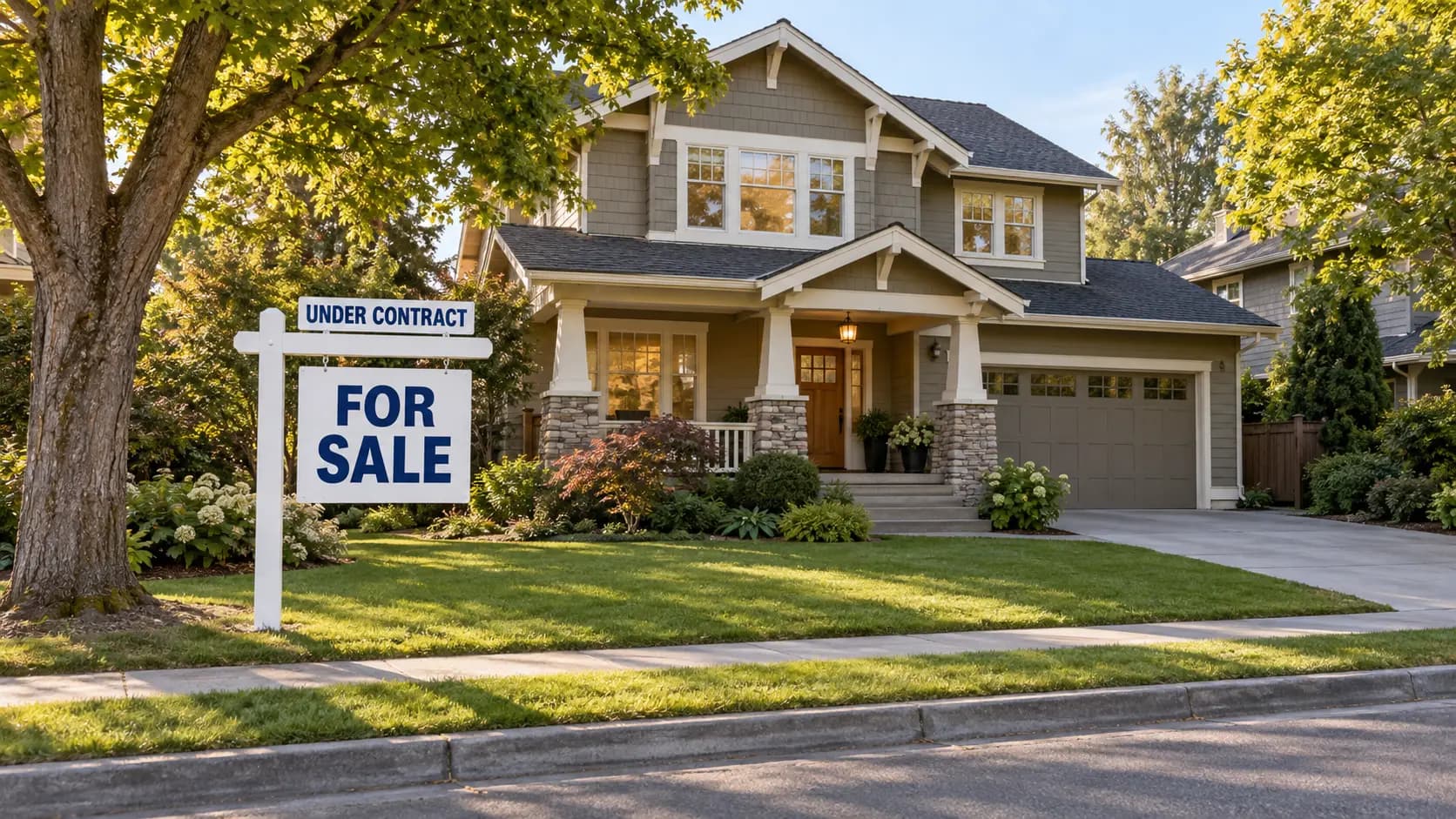
Active under contract means a seller has accepted an offer, but the sale has not closed yet because one or more contingencies, like financing, inspection, or appraisal, are still unresolved. The listing typically stays visible on Zillow and other listing sites because not every accepted offer makes it to the closing table, and sellers want to keep their options open in case the current deal falls apart. For a seller, the status keeps the home in front of the market while the deal proves itself. For a buyer, it can still be a real opportunity. Below, we cover the contingencies that keep a listing in this status, how it differs from pending, whether you can make an offer on one, and why the label varies by market.
What contingencies keep a listing active under contract?
Contingencies, like financing, inspection, appraisal, and home sale conditions, are what keep a listing active under contract until every one of them is satisfied. A contingency is simply a condition written into the purchase agreement: a box that must be checked before the sale can legally move forward. Until every box is checked, the listing stays active under contract rather than flipping to pending.
The usual suspects:
- Financing contingency: The buyer needs their mortgage to actually come through. Pre-approval is one thing; full loan approval, after underwriting has picked apart every financial detail, is another.
- Home inspection contingency: A licensed inspector goes through the property, and the buyer typically has the right to negotiate repairs, request credits, or walk away if something serious turns up.
- Appraisal contingency: The lender sends an appraiser to confirm the home is actually worth what the buyer agreed to pay. If the number comes in low, the deal can stall or collapse unless someone adjusts the price or covers the difference.
- Home sale contingency: The buyer needs to sell their current home before they can close on the new one, which adds a whole separate transaction's worth of uncertainty into the mix.
Any one of these can take days or weeks to resolve, and any one of them can derail the sale. That's the entire reason the industry didn't just call this "pending" from the moment the offer got accepted. The property sits in active under contract status specifically because there's real, unresolved risk that the deal doesn't happen, and the market deserves to know that.
How is active under contract different from pending?
Active under contract vs pending comes down to whether the contingencies are still open. Active under contract means a deal's contingencies (financing, inspection, appraisal) are still unresolved, while pending means those contingencies have cleared and only the closing paperwork remains. These two statuses get lumped together constantly, but they're not the same thing, and the difference matters if you're trying to figure out whether a house is realistically available.
Active under contract
Contingencies are still live. Financing hasn't cleared underwriting, the inspection period might still be open, and the appraisal hasn't landed yet. Because of that uncertainty, many sellers keep showing the home and may consider backup offers.
Pending
The contingencies are done. Inspection issues got resolved, financing got approved, and the appraisal matched the price: the deal has cleared every hurdle except the actual closing paperwork. At this point, most sellers stop showing the property altogether, since the risk of the deal falling apart is much lower at this stage.
Here's the simplest way to think about it: active under contract is a deal still proving itself. Pending is a deal that already has.
That distinction should shape your strategy. If a home is active under contract and you're serious about it, a backup offer is a reasonable move, since there's still meaningful uncertainty in play. If a home has flipped to pending, the odds of it coming back on the market are much slimmer, since the hard part is already behind it. Neither status means the home is off limits, but they carry different odds, and treating them the same way is how buyers miss opportunities or waste time on properties that are functionally already sold.
Can you still make an offer on a home that's active under contract?
Yes, you can still make an offer on a home that's active under contract, usually as a backup offer, and there's a data-backed reason to consider it.
Industry data from the first quarter of 2025 shows that roughly 7% of real estate contracts were terminated before reaching closing. Financing falls through. Inspections turn up something the buyer won't accept. Appraisals come in low and negotiations break down. It happens often enough that smart buyers plan around it instead of ignoring it.
This is where the backup offer becomes a genuinely useful strategy rather than a long shot. When you submit a backup offer on a property that's active under contract, you're essentially getting in line. If the primary buyer's financing falls apart, or their inspector finds foundation cracks the buyer isn't willing to live with, the seller doesn't have to start the marketing process over from scratch. They already have you.
A few practical things worth knowing if you're considering this route:
- Requirements vary by market: Backup offer rules differ by location, but it's generally treated as a real offer rather than just an expression of interest.
- Communication matters: Work through your agent here, since sellers and listing agents aren't always transparent about how close (or shaky) the primary contract really is.
- Pricing your offer: If you're trying to decide how much to put behind a backup offer, a data-driven valuation like the free report from Kelley Blue Book Homes can show you where the listing price actually sits relative to the home's real market value, rather than guessing based on the asking price alone.
Because contract terms, earnest money rules, and backup offer procedures vary by state and brokerage, it's worth having a real estate attorney or your agent review any offer before you sign it.
The misconception that "active under contract" means "essentially sold" can cause plenty of buyers to walk away from homes they might have ended up owning.
Why do sellers keep a home listed as active under contract?
Sellers keep a home active under contract to preserve momentum: it lets them keep collecting backup offers and avoid restarting the marketing process from zero if the current deal falls through. From the seller's side, this status is not an accident or an oversight: it's strategy.
Consider the alternative: a seller accepts an offer, immediately pulls the listing down, stops all showings, and then three weeks later the buyer's financing falls apart. Now the seller is starting from zero. No momentum, no backup buyers, no accumulated interest. They're back to square one, except now the home has a gap in its market history that savvy buyers might read as a red flag, wondering why the sale fell through.
Keeping the home active under contract avoids that scenario entirely. The seller maintains visibility, keeps the showings going (or at least keeps the door open to them), and collects backup offers as a cushion.
Here's how this plays out: a buyer's home inspection turns up issues, and the buyer, understandably, walks. Normally this would send the seller back to relisting, re-marketing, and waiting for fresh interest, an expensive delay in both time and carrying costs. But if the seller had a backup offer already in hand from someone who saw the home during the active-under-contract period, they can pivot to that buyer almost immediately. No relisting, no months of sitting empty, just a fast handoff to the next buyer in line.
That's the entire logic behind the status: it turns a potential setback into a manageable inconvenience instead of a full restart.
Why do some listings call this status something else?
Some listings call this status "contingent" instead of "active under contract" because there is no universal rulebook that forces every market or platform to use the same label for an accepted offer with unresolved contingencies. In plenty of regions, and on plenty of listing platforms, the same scenario, offer accepted, contingencies still pending, gets labeled simply as "contingent." If you are comparing the two labels, see what contingent means for sellers.
Some markets draw a sharp line between "contingent" and "active under contract" as two distinct sub-statuses with different meanings. Others use the terms interchangeably to describe the exact same situation. Listing platforms such as Zillow sometimes apply their own labeling conventions on top of whatever the local MLS (Multiple Listing Service) uses, so what under contract means on Zillow depends on the sub-status the local MLS reported. That can create confusion for anyone browsing listings across different sites or regions.
The practical takeaway: don't assume the label means the same thing everywhere. If you're working in an unfamiliar market, or you're comparing listings across regions, take a minute to confirm what your local MLS and the specific listing platform actually mean by "contingent" versus "active under contract." Ask your agent directly: it's a quick question with a real answer, and the answer might change whether you decide to submit that backup offer or move on to the next listing.
The label is just shorthand. What actually matters is the same everywhere: whether the deal has cleared its contingencies. Get that answer, and you'll know exactly where you stand, no matter what the listing happens to call it.
How Kelley Blue Book Homes can help
Whether you're weighing a backup offer on a home that's active under contract or trying to figure out if a listing price actually reflects the market, the underlying question is the same: what is this home really worth. A clear, independent read on that number gives you a firmer footing than watching status labels alone.
Kelley Blue Book Homes brings the independent pricing authority Kelley Blue Book built over nearly a century to residential real estate. Its free home valuation report is engineered to land within 3% of the final sale price, built on neighborhood-level data that accounts for your specific renovations, micro-market trends, and seasonal timing rather than broad metro averages.
You can get a customized and independent home estimate quickly, and turn that initial estimate into a strategy with the support of a verified local expert from Kelley Blue Book Homes. Get your free home value report at KelleyBlueBookHomes.com.
Keep reading
What Does Contingent Mean in Real Estate for Sellers
What does contingent mean in real estate? A signed contract that still depends on financing, inspection, or appraisal. See what sellers should do next.

How Long Does It Take to Close on a House?
How long does it take to close on a house? Most financed purchases close in 30 to 45 days, cash deals in 7 to 14. See what sets the pace and what slows it.

What Home Inspectors Look For (and What It Means for Your Price)
What home inspectors look for, from foundation to HVAC, plus common problems, typical repair costs, and whether new homes need inspections too.
The Home Selling Process: How Everything Works
Before jumping into your home-selling journey, you should know a few things. Actually, there are lots of things you need to know. Selling your home is a…