
How Long Does It Take to Close on a House?
9 min read

How long does it take to close on a house? Most financed home purchases close in 30 to 45 days from accepted offer to closing day, and cash purchases typically close in 7 to 14 days. Closing itself deserves a quick definition too: it is not just paperwork day, it is the entire stretch between an accepted offer and getting the keys. Where a specific purchase lands in that range depends on loan type, title history, and how quickly paperwork moves between buyer, lender, and title company. In this article, we break down each of those variables so you can estimate your own closing timeline.
How does your loan type change the closing timeline?
Loan type changes your closing timeline mainly through appraisal rules and property-condition requirements: conventional loans tend to close fastest, while government-backed loans like FHA (Federal Housing Administration) and VA (Department of Veterans Affairs) loans typically take longer because they require the home to meet minimum livability standards, not just a value appraisal. The loan you choose comes with its own underwriting standards, appraisal expectations, and in some cases, inspection requirements, all of which can add or subtract time from your closing date.
- Conventional loans (30 to 45 days): These are the baseline. Underwriting standards are well established, appraisers know exactly what lenders need to see, and there's no additional government agency reviewing the property on top of the lender. If everything about your financial picture is clean and the appraisal comes in at or above the purchase price, this is typically the fastest financed path to the closing table.
- FHA (Federal Housing Administration) loans (45 to 60 days): FHA-backed loans tend to move slower for a structural reason, not a bureaucratic one: the property itself has to meet minimum livability and safety standards, not just satisfy a value appraisal. That means the appraiser is doing double duty, confirming price and confirming condition, which can trigger repair requirements before the loan moves forward. If the home needs work to meet FHA standards, that negotiation alone can add weeks.
- VA (Department of Veterans Affairs) loans (45 to 55 days): VA loans carry a similar dynamic, with the appraisal process as the primary bottleneck, and minimum property requirements similar in spirit to FHA's.
The pattern across all three: the more a loan program cares about the physical condition of the house, not just its price, the longer the appraisal and inspection phase tends to run. In practice, a government-backed loan paired with a complicated inspection list can stretch toward the high end of that 45-to-60-day range. If speed matters to you, ask your lender directly about a loan program's appraisal and property-standard requirements, not just its interest rate. Because financing timelines vary by lender and loan program, it's worth consulting a mortgage professional to confirm current requirements for your specific situation.
What happens week by week between offer and closing day?
Between an accepted offer and closing day, a financed purchase typically moves through five overlapping stages, spread across four to six weeks: inspection, appraisal, title search, underwriting, and a mandatory disclosure review. A lot happens behind the scenes during that stretch: the lender verifies every detail of the buyer's finances, an appraiser confirms the home is worth the purchase price, a title company checks for competing legal claims on the property, and eventually everyone signs a stack of closing documents. None of that happens instantly, and none of it should. Each step exists because skipping it has caused real problems for buyers, sellers, and lenders in the past, which is why the industry built permanent safeguards around it.
Here's roughly how the weeks break down on a financed purchase:
- Days 7 to 10: Home inspection. Usually scheduled within the first week to ten days after your offer is accepted. This is where a buyer finds out what's actually going on with the roof, the foundation, the wiring, and where repair negotiations often begin.
- Days 7 to 14 (often overlapping with inspection): Appraisal. Your lender orders an independent appraisal to confirm the home is worth what you've agreed to pay. This step can't be rushed much, since it depends on the appraiser's schedule and local comparable sales data.
- 5 to 10 business days: Title search. A title company digs through public records to confirm the seller actually has clear legal ownership and that there are no liens, unpaid taxes, or ownership disputes attached to the property. This usually runs in parallel with the appraisal, not after it.
- Ongoing: Underwriting. This is the least predictable stage timing-wise. Your lender's underwriting team reviews your income, assets, debt, and the appraisal and title results together. A clean file with no surprises might sail through in a week, while a file with self-employment income, gaps in documentation, or a recent job change can take considerably longer.
- Final 3 business days: Closing Disclosure review. By federal law, you must receive your Closing Disclosure (the document spelling out your final loan terms and closing costs) at least three business days before your scheduled closing. This isn't a formality lenders can skip to speed things up; it's a mandated cooling-off period so buyers aren't signing final numbers they haven't had time to review. If anything on the Closing Disclosure looks unfamiliar, asking your lender or a real estate attorney to walk through it before you sign is a reasonable step.
Mapped out, that's roughly four to six weeks of work happening in overlapping tracks, not one after another. The clearest way to estimate your own timeline is to identify which of these stages is moving slowest in your specific transaction: that's usually where your closing date is actually being decided.
Why doesn't paying cash mean closing happens instantly?
Paying cash doesn't make closing instant because two steps still take time regardless of financing: the title search and, commonly, a home inspection. It's a reasonable assumption that removing the lender, loan approval, and underwriting from the process would make cash deals close in just a few days. In practice, cash purchases still typically take 7 to 14 days, and the reason comes down to those two steps having nothing to do with financing at all.
Title still has to be searched and cleared
Whether you're financing or paying outright, someone still needs to confirm the seller has clear legal ownership and that there's nothing (an old lien, an unresolved estate matter, a boundary dispute) attached to the property that could follow you after purchase. That search takes time regardless of how you're paying, because it depends on public records and local title company capacity, not your bank account.
Inspections still make sense
Removing a lender from the equation doesn't remove the value of knowing what you're buying. Cash buyers commonly still choose to inspect the property, a process that typically follows a similar timeline to financed deals.
What cash purchases do eliminate is the appraisal requirement and the underwriting review, both lender-driven steps rather than property-driven ones. That's a real time savings, just not the instant, same-week transaction people sometimes expect. The clearest way to think about it: cash buyers skip the financing steps, not the ownership-verification steps.
What typically delays a closing?
Closings typically get delayed because of four recurring problem areas: underwriting document issues, unresolved title liens, appraisal shortfalls, and inspection findings. Knowing them ahead of time means you can watch for them rather than get blindsided.
- Underwriting document issues: Missing pay stubs, unexplained bank deposits, recent changes in employment, or incomplete tax returns are among the most common reasons a loan file stalls. Underwriters can't approve what they can't fully verify, so any gap in your paperwork becomes a pause button.
- Unresolved title liens: A title search that turns up an old contractor's lien, unpaid property tax, or a name discrepancy from a prior owner has to be resolved before the sale can proceed. These issues are often decades old and unrelated to the current seller. A title company can typically resolve them, for example by having the seller pay off the lien or by using title insurance to cover the risk. If something unusual turns up, consulting a real estate attorney or title professional is a reasonable next step.
- Appraisal shortfalls: If the appraisal comes in below the agreed purchase price, the deal doesn't automatically fall apart, but it typically requires renegotiation. Buyers may need to bring more cash to closing, sellers may need to lower the price, or both sides negotiate a middle ground. Any of those conversations takes time. Going into an offer with a data-driven read on price, such as the free valuation report from Kelley Blue Book Homes, can give both sides a clearer sense of whether the agreed price is likely to hold up once an appraiser looks at it.
- Inspection findings: Significant issues discovered during inspection (structural concerns, outdated electrical systems, roof damage) often trigger a second round of negotiation over repairs or credits, sometimes requiring follow-up inspections to confirm work was completed.
The common thread across all four: they're not really "closing" problems, they're negotiation and verification problems that happen to surface during closing. That's why the strongest defense against delay isn't rushing the process, it's getting ahead of these issues before they show up.
How can buyers keep their closing on schedule?
Buyers can keep a closing on schedule mainly by controlling what's within their power: getting pre-approved, organizing documentation early, avoiding new debt, and working with experienced professionals. You can't control every variable in a home closing, but the ones on your side of the table matter more than most buyers realize.
- Get pre-approved, not just pre-qualified: Pre-approval means a lender has already reviewed your income, assets, and credit in detail, which can help speed up the eventual underwriting review. It's worth being clear-eyed here: pre-approval can reduce delay risk, but it doesn't eliminate it. Appraisal issues, title problems, and inspection findings can still surface regardless of how strong your pre-approval is.
- Get your documentation organized before you're asked for it: Underwriters tend to request the same categories of paperwork: pay stubs, bank statements, tax returns. Having these ready and accessible can help you avoid scrambling (and losing days) when the request comes in.
- Don't make big financial moves during the closing window: New car, new credit card, a big furniture purchase on credit: any of these can change your debt-to-income ratio enough to trigger a second look from underwriting, right when you thought you were done. A new liability at the wrong moment can genuinely stall a file.
- Work with people who do this constantly: An experienced agent, lender, and title company aren't just nice to have: they can be the difference between catching a title issue in week one versus week five. Experience in this process typically shows up as fewer surprises, not necessarily a faster calendar.
One more point worth sitting with: a longer closing isn't automatically a worse outcome. In certain situations, a slightly extended timeline can give buyers more room to negotiate repairs, resolve title questions properly, or simply avoid rushing into a decision under pressure. Fast isn't always better: steady and well-documented usually beats fast when there's real money and a real house on the line.
How can sellers keep a closing on schedule?
The seller's side of a closing moves faster when contract obligations are finished before the buyer's lender asks about them. Repairs agreed to after the inspection should be completed early, with receipts, because underwriting cannot issue final approval while a repair condition is still open. Disclosure forms and any documents the buyer's agent requests during the first two weeks belong in the same category.
Title and homeowners association requests deserve a same-day answer. The title company may need a payoff statement for the existing mortgage, proof that an old lien was released, or association documents. Each request that sits unanswered adds days to the title search.
How Kelley Blue Book Homes can help
A closing timeline runs smoother when the purchase price was grounded in accurate data from the start, since appraisal shortfalls and last-minute renegotiations are often the biggest source of delay. Knowing what a home is actually worth before an offer is signed gives both buyers and sellers one less variable to fight about once the clock starts.
Kelley Blue Book Homes brings the independent pricing authority Kelley Blue Book built over nearly a century to residential real estate. Its free home valuation report is engineered to land within 3% of the final sale price, built on neighborhood-level data that accounts for your specific renovations, micro-market trends, and seasonal timing rather than broad metro averages.
You can get a customized and independent home estimate quickly, and turn that initial estimate into a strategy with the support of a verified local expert from Kelley Blue Book Homes. Get your free home value report at KelleyBlueBookHomes.com.
Keep reading
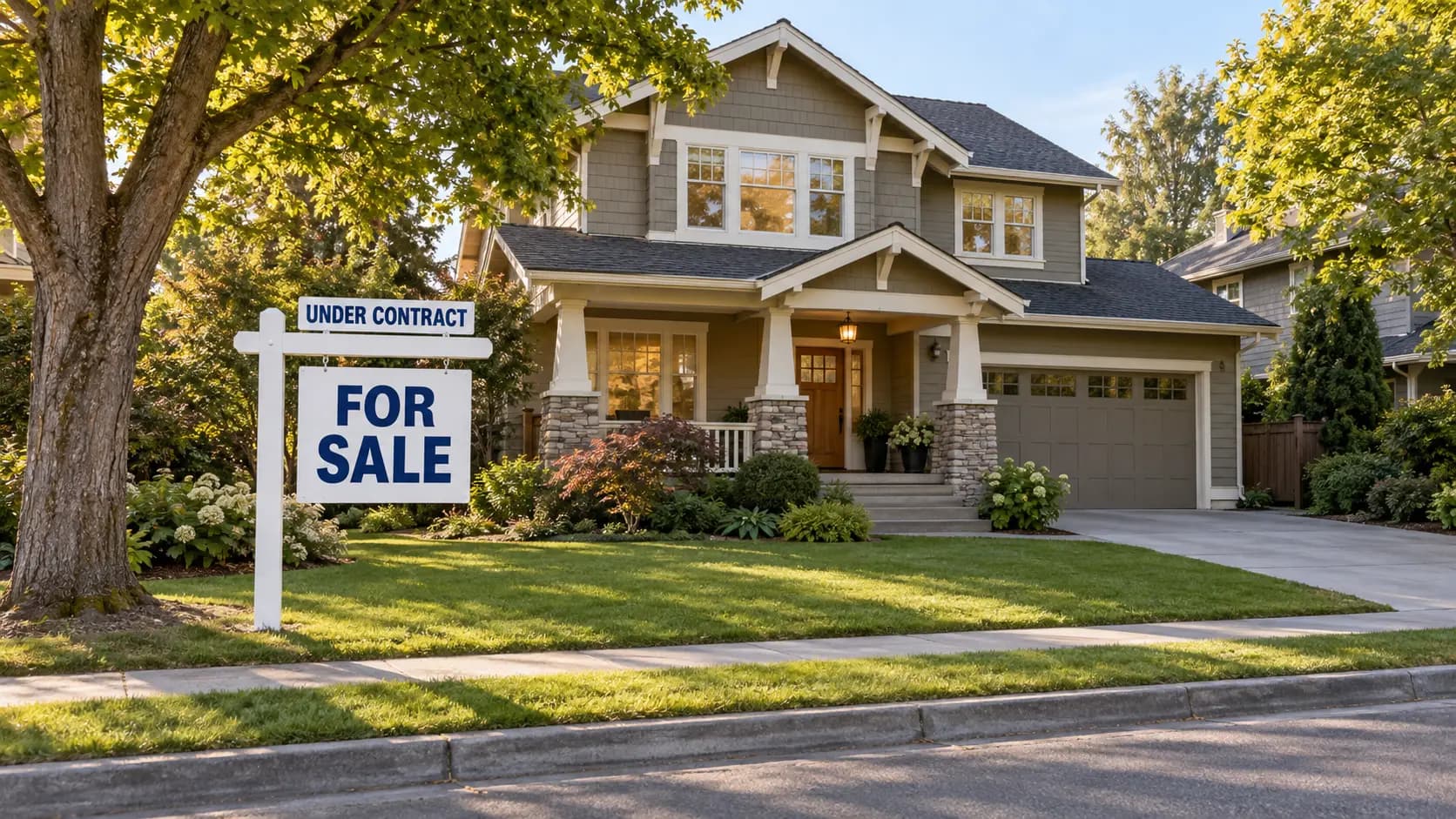
What Does Active Under Contract Mean?
Active under contract means a seller accepted an offer but contingencies like financing or inspection are still open. What the status means for sellers.

What Is a Home Appraisal and How Does It Work?
A home appraisal is a licensed value estimate lenders require for a mortgage. See how the process works, what it costs, and what a low appraisal means.
The Home Selling Process: How Everything Works
Before jumping into your home-selling journey, you should know a few things. Actually, there are lots of things you need to know. Selling your home is a…