
What Home Inspectors Look For (and What It Means for Your Price)
7 min read
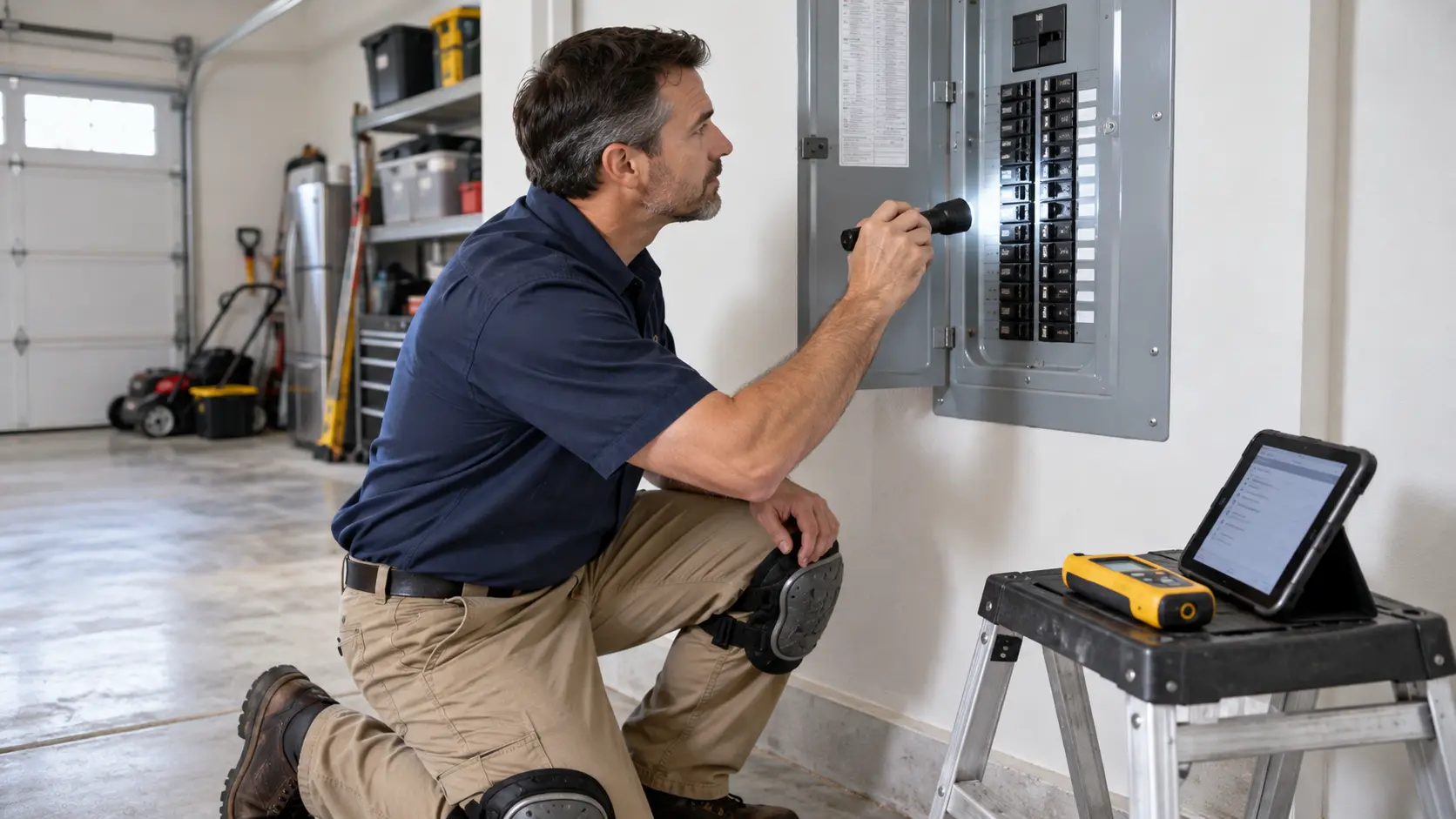
What do home inspectors look for? They check every major system of a house for problems, from the foundation and roof to the electrical panel and HVAC (heating, ventilation, and air conditioning) equipment. If you've ever sat in a driveway while an inspector works through a house with a flashlight and a clipboard, you know how long two or three hours can feel. The process is more predictable than it feels in the moment: inspectors follow a fairly standard checklist, and knowing what's on it turns the walkthrough from a mystery into a plan. In this article, we cover what inspectors check, the problems they find most often, what those problems typically cost to fix, and whether new construction needs the same scrutiny as an older home.
What does a home inspector look for during a home inspection?
Home inspectors check every major system of a house, moving from the outside in: foundation, roof, exterior, drainage, plumbing, electrical, HVAC, interior, and chimney. Inspectors are trained to look past cosmetic finishes to the bones and guts of the property, and a standard inspection covers:
- Foundation and framing: checked for cracks, shifting, or sagging that might point to settling or structural strain.
- Roof: shingles, flashing, gutters, and downspouts, since even a small gap here can let water in over time.
- Siding, trim, windows, and doors: inspected for rot, poor sealing, and whether they actually open, close, and lock the way they should.
- Grading and drainage: making sure the ground slopes away from the house instead of funneling water straight toward the foundation.
- Plumbing: pipes, fixtures, and water pressure, along with the age and condition of the water heater.
- Electrical: the panel's capacity and safety, the wiring throughout the house, and whether outlets near water sources have the shock-prevention protection they need.
- HVAC: the age and performance of heating and cooling equipment, plus the condition of the ductwork carrying air through the house.
- Interior: walls, ceilings, floors, stairs, and railings, watched for water stains, cracks, or anything that feels unstable underfoot.
- Fireplaces and chimneys: checked for structural soundness and buildup that could be a fire risk.
That's a lot of ground to cover, and it's exactly why inspections take the time they do. Every one of these systems can affect either your safety, your monthly costs, or your ability to sell the place down the road without a fight over repairs.
What are the most common problems home inspectors find?
The most common problems home inspectors find cluster around the roof, electrical panel, plumbing, and HVAC system. Almost every inspection turns up at least one issue, which surprises a lot of first-time buyers. Industry estimates, often attributed to the National Association of Home Inspectors, suggest that roughly 86% of inspections turn up at least one issue worth flagging, though exact figures vary by source, so treat this as a general rule of thumb rather than a precise benchmark. The good news is that most of those issues are minor, not deal-breaking.
The problems that show up again and again tend to cluster in a few predictable spots:
- On the roof: Damaged or missing shingles and improperly installed flashing are some of the most frequent findings, and they're often the reason a roof starts leaking well before anyone notices water inside the house. Poor attic ventilation makes this worse, trapping moisture that shortens the roof's lifespan from the inside out.
- In the electrical panel: Older homes still carrying outdated wiring, like knob-and-tube or aluminum, show up constantly and represent a real safety concern rather than a nitpick. Overloaded circuits are another common flag, especially in homes where additions or renovations added electrical demand without upgrading the panel to match. Missing shock-prevention outlets near sinks, tubs, and exterior areas are an easy, common fix that inspectors catch often.
- In the plumbing: Leaky pipes and aging water heaters are the frequent flyers here. Neither is usually catastrophic on its own, but both tend to cause slow, hidden damage if they go unaddressed.
- In the HVAC system: Aging units nearing the end of their expected lifespan, along with dirty filters and neglected ductwork, are common enough that inspectors treat them almost as a given in homes over a certain age.
None of this means every house is falling apart. It means most houses are lived-in, which is a different thing entirely. Wear is normal. What matters is knowing which wear is cosmetic and which is the early sign of something more expensive.
What do inspectors look for in attics, crawl spaces, and basements?
Inspectors look for moisture intrusion, mold, poor insulation and ventilation, and foundation or drainage problems in the attic, crawl space, and basement, since these hidden areas can hide issues a regular walkthrough would miss. The parts of a house nobody walks through casually are exactly where inspectors spend some of their most careful attention.
- Moisture intrusion: Water finds the lowest or least ventilated point in a house and settles there quietly, which is why crawl spaces and basements are prime real estate for hidden dampness. Inspectors look for staining, efflorescence on foundation walls, and any signs that water has been pooling or seeping in.
- Mold: Mold often follows moisture, and inspectors check for visible growth as well as the musty smell that tends to give it away even before it's visible. Mold remediation isn't cheap, so catching it early can change the entire cost equation for a buyer.
- Insulation and ventilation: These get a close look in the attic specifically. Poor insulation can drive up energy bills and make temperature control harder throughout the house, while inadequate ventilation traps heat and moisture that accelerate roof wear from underneath.
- Foundation and drainage signs: Cracks in a foundation wall, uneven floors overhead, or standing water in a crawl space all point toward the same underlying concern: water isn't draining the way it should, and the structure is absorbing the consequences.
These hidden-area checks matter because they can catch problems that would otherwise stay invisible until they became expensive. A stain in a crawl space today is typically a lot cheaper to deal with than a rotted floor joist two years from now.
How much do inspection issues typically cost to fix?
Inspection issues typically cost anywhere from a few hundred dollars for minor repairs to tens of thousands of dollars for major structural problems, since price is driven mainly by severity rather than the type of issue itself. This is usually the question buyers actually care about most. Based on industry cost data, here are typical ranges for the most common inspection findings, though these are best treated as rules of thumb rather than fixed quotes:
| Issue | Typical Repair Cost Range |
|---|---|
| Foundation repairs | $300 to $30,000 |
| Roof fixes | $380 to $1,800 |
| Mold remediation | $1,100 to $3,400 |
That foundation range is wide enough to be almost meaningless on its own, and that's the point. A hairline crack that's cosmetic and stable might cost a few hundred dollars to seal. A foundation that's actively shifting could mean a five-figure structural repair. The inspection report, paired with a structural engineer's opinion if needed, is what tells you which end of that range you're actually dealing with.
For significant structural findings, consulting a licensed structural engineer or contractor before finalizing an offer is a sound step.
What's worth remembering is that these numbers aren't just repair estimates, they're negotiating tools. Industry data on inspection-driven negotiations puts the average buyer leverage at roughly $7,200, though actual leverage varies by house and market, so treat it as a directional benchmark rather than a guarantee. An inspection report with specific, cost-backed findings gives both sides something concrete to work from instead of a vague sense that "the house needs some work."
Do brand-new homes still need a home inspection?
Yes, new construction still needs an inspection, and skipping one is a genuine gamble. This is one of the more persistent myths in real estate, and it's worth clearing up directly.
The logic behind the myth makes sense on the surface: new house, new materials, seemingly nothing left to find. But inspectors regularly turn up real issues in freshly built homes, including:
- Installation defects: components that were installed quickly or incorrectly during the construction rush, even when the materials themselves are fine.
- Code compliance issues: details that got missed or misapplied during the build, particularly in electrical and plumbing systems where inspections during construction don't always catch everything.
- Unfinished work: items that were meant to be completed before closing but slipped through, from missing insulation to improperly sealed windows.
New construction moves fast, with multiple subcontractors working on tight schedules, and that pace creates room for small errors that don't get caught until a dedicated, independent inspector goes through the house room by room. A builder's own walkthrough isn't a substitute for this, since builders have an obvious interest in the outcome. An independent inspection gives you a second, unbiased set of eyes before you take ownership of a house that, brand-new or not, still deserves the same scrutiny as any other.
For a newly built home, an independent inspection establishes the property's actual condition, separate from the builder's own assessment. Pairing that condition report with an estimated value, like the one Kelley Blue Book Homes provides for a listing, can give buyers a clearer basis for negotiating repairs or price adjustments before closing.
Home inspection checklist for sellers
Sellers can walk this same list before the home goes on the market. Anything you fix now cannot come back as a repair credit or seller concession request, and a home priced on its real condition gives the buyer's inspector less to reopen. Repairs worth skipping are covered in what not to fix when selling a house.
- Label the electrical panel and confirm no breaker trips under normal use.
- Write down the age of the water heater and keep it with your disclosures.
- Replace the HVAC filter and have the unit serviced. Keep the receipt with the age of the equipment.
- Go into the attic and crawl space yourself before the inspector does.
- Have the chimney flue cleaned and keep the receipt.
How Kelley Blue Book Homes can help
An inspection tells you the condition of a house, but condition and price are two different questions, and both matter once repairs start showing up on a report. Knowing what a home is actually worth gives those inspection findings context, whether you're the one making an offer or the one deciding how to respond to a buyer's request.
Kelley Blue Book Homes brings the independent pricing authority Kelley Blue Book built over nearly a century to residential real estate. Its free home valuation report is engineered to land within 3% of the final sale price, built on neighborhood-level data that accounts for your specific renovations, micro-market trends, and seasonal timing rather than broad metro averages.
You can get a customized and independent home estimate quickly, and turn that initial estimate into a strategy with the support of a verified local expert from Kelley Blue Book Homes. Get your free home value report at KelleyBlueBookHomes.com.
Keep reading
What Not to Fix When Selling a House (Data-Backed)
Buyers rarely pay back a remodel. See what not to fix when selling a house, the cosmetic wear buyers expect, and the safety repairs you should never skip.

What Does Contingent Mean in Real Estate for Sellers
What does contingent mean in real estate? A signed contract that still depends on financing, inspection, or appraisal. See what sellers should do next.

What Is a Home Appraisal and How Does It Work?
A home appraisal is a licensed value estimate lenders require for a mortgage. See how the process works, what it costs, and what a low appraisal means.