
Home Staging Tips for a House You've Lived In for Decades
 Written by
Tom Ferry
CEO, Ferry International
Tom Ferry is the founder and CEO of Ferry International, the world’s largest real estate coaching and media platform. Since founding it in 2002, he has grown the company to more than 200 certified coaches in four countries, serving thousands of agents and team leaders.
 Reviewed by
Matt Hyatt
Chief Appraiser and General Manager at True Footage
SRA, ATA-R, and MNAA
Matt Hyatt is Chief Appraiser and General Manager at True Footage, the largest appraisal firm in the country. He brings 30 years of experience in the appraisal industry.
Published on Updated on 8 min readCites 7 sources
Fact checkedThe short answer
To stage a long-owned home, clear surfaces down to two or three objects and closets to about half full, remove family photos and collections, brighten every room with matching bulbs and open curtains, and arrange furniture so buyers see floor and walls. Start with the living room, kitchen and primary bedroom, since buyers usually see those first online.
The best home staging tips for a house you've owned a long time come down to one job. Take out enough of your own life that a buyer can picture theirs. After twenty or thirty years, that's mostly packing, sorting and letting in light.
It's a big job, and it can feel personal. Most of it costs little, and it's work you'd do before a move anyway. This guide goes room by room, starting with the steps that pay off first.
What does home staging mean for a house you've lived in for decades?
In a house you've owned for decades, the most useful home staging tips are about taking things out. Furniture bought for a family of five is still there for two. Buyers judge square footage, light and storage, and full rooms hide all three.
Repairs are a separate decision, and our post on what not to fix when selling a house covers which ones to skip. For the outside of the house, see how curb appeal affects home prices. This guide covers the inside.
Where do you start when every room is full?
Start with the living room, kitchen and primary bedroom, because buyers usually see those first online. Finish one room completely before you start the next one.
- Sort into four piles. Keep, give to family, sell or donate, and discard. Make the calls on big furniture first.
- Pack what you'll keep but won't need for a few months. Label each box by its room in the next home, then move the boxes out of the house.
- Clear surfaces down to two or three objects. That means counters, dressers and nightstands.
- Edit closets to about half full. Buyers open closets and judge storage by what they see.
If you're downsizing, you'd have to do this sorting anyway. Doing it now just moves it a few months earlier. Our guide to downsizing your home can help you decide what fits in the next place. Ask your children early which pieces they want.
How do you depersonalize without feeling like you're erasing your home?
Think of it as packing early. Everything you take down is coming with you anyway.
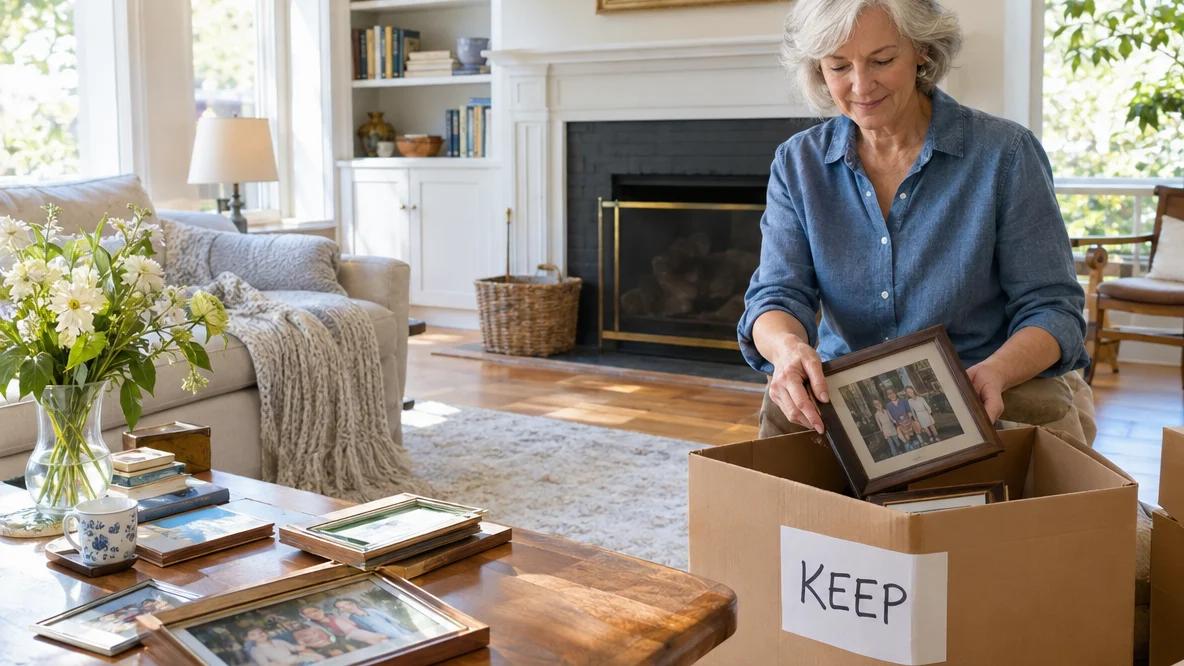
- Family photos, diplomas and the grandchildren's artwork.
- Collections such as figurines, plates or old magazines.
- Religious and political items, for the few weeks of showings.
- Walkers, shower chairs and medical supplies. Installed grab bars can stay, and your agent can point them out to buyers who want them.
Leave one or two pieces of art in each room. Bare walls make a house look like a rental.
Which home staging tips make a long-owned home look less dated in photos?
Light, furniture and wall color usually make a long-owned house look dated. Most of the fixes cost little, and you can do the lighting and furniture in a weekend.
Light every room the same way
Choose one bulb color and use it in every fixture. If the bulbs are mixed, some rooms photograph yellow and others blue. Tie heavy drapes all the way back and wash the windows. Turn on every light, lamps included, for photos and for showings.
Scale the furniture to the room
Take one or two pieces out of each room so buyers can see the floor. Oversized recliners, second sofas and dining tables with every leaf in are the usual ones to go. Pull the seating that's left into a group around a rug or the fireplace.
Quiet the loudest colors
Wallpaper borders and strong accent walls stand out in photos. Before you buy a gallon of paint, look at the photos of competing listings in your neighborhood. Then ask your agent whether painting would make a difference.
How should you stage the kitchen and bathrooms?
Buyers open every door in these rooms, so stage the inside of the cabinets as well as the counters.
- Counters. Put the small appliances and canisters away. Leave one simple item out, like a bowl of lemons.
- Cabinets and pantry. Thin them out until the shelves show some open space.
- Appliances. Clean the oven, the range hood filter and the inside of the refrigerator. Take every magnet off the front.
- Bathrooms. Put out new white towels and a plain shower curtain. Scrub the grout and recaulk a yellowed tub edge.
Should you hire a professional stager or do it yourself?
Most owners can do this work themselves. Start with your listing agent. Many agents offer a staging walkthrough, and you negotiate what's included in your listing agreement with the agent.
Paying a stager makes the most sense when the house is vacant, when the furniture is very large or very dated, or when you've already moved and are running the sale from another state. Fees vary by market, so get a written quote, and ask how furniture rental is billed if the house takes longer to sell than planned.
How much staging matters depends on your local market. Look up the median days on market and the number of active listings like yours in your ZIP code. When comparable homes sit for weeks, the way your house is presented carries more weight.
How do you stage an empty house from an estate?
An empty house photographs smaller than it is. If you're settling a parent's estate, furnish the living room, dining room and primary bedroom, either with their better pieces or with rental furniture. If you use virtual staging, ask your agent how your local multiple listing service requires edited photos to be labeled.
Keep the utilities on and check on the house every week. Before you sell or give away anything inside it, confirm with the estate's attorney that you have the authority to do so. The answer depends on your state's probate rules.
How do you keep the house show-ready while you're still living in it?
Showings can come with little notice. Build a reset you can finish in about fifteen minutes.
- Make the beds and clear the counters.
- Wipe the bathroom sinks and hang the good towels.
- Open the blinds and turn on every light.
- Take the trash and pet bowls out to the garage.
Before the first showing, put away or lock up medications, jewelry, firearms and personal papers, since visitors will walk through every room. Plan to be out of the house during showings so buyers feel free to talk.
Does staging change what your home is worth?
Your home's value rests on its location, size, condition, upgrades and the prices nearby homes have recently sold for. Staging shapes how buyers respond to those facts. It can affect how many buyers come through and how quickly offers arrive.
Price still has to be right. If a staged house is listed too high, it sits on the market and can end up selling for less. So before you spend money on staging, get your free Kelley Blue Book Homes valuation report. It asks about your home's condition and recent upgrades and takes about 5 minutes. It's designed to land within 3% of the final sale price.
How Kelley Blue Book Homes can help
Staging works best when you can see the homes you're competing with. Your free Kelley Blue Book Homes valuation report shows comparable homes from your neighborhood, local pricing trends and market demand signals, with your condition and upgrades factored in. It's ready in minutes. It costs nothing, and there's no obligation.
Every report also connects you with a vetted local Kelley Blue Book Homes agent who has seen your valuation before you first talk. Kelley Blue Book Homes vets its Verified Agents on sales volume, days on market and sale-to-list ratio. Before you sign with any agent, ask for their listing success rate too, meaning the share of the listings they take that actually close. Your agent uses your report to help you build a pricing and timing strategy for your market and your goals. For what happens after staging, read our guide on how to sell a house.
Enter your home address to get your free valuation report.
Key Points to Remember
- Staging a long-owned home is mostly about taking things out, so clear surfaces to two or three objects and closets to about half full.
- Start with the living room, kitchen and primary bedroom, and finish each room before you start the next.
- Matching bulbs, open curtains and fewer pieces of furniture make rooms look bigger and brighter in listing photos, and they cost little.
- Value rests on location, condition, upgrades and nearby sales, so know your number before you spend money on staging.
- Check your ZIP code's days on market and competing listings to judge how much staging matters where you live.
Frequently asked questions
Is home staging worth it for an older home?
For most older homes, the staging that matters costs very little. Clearing clutter, taking down personal items, using matching bulbs and removing oversized furniture make rooms look bigger and brighter. Paying a stager makes the most sense when the home is vacant or the furniture is very dated.
Should I stage my house if I'm still living in it?
Yes. Pack away whatever you won't need for a few months, then keep the house ready with a fifteen-minute reset before each showing. Make the beds, clear the counters, open the blinds and turn on the lights. Lock up medications, jewelry, firearms and personal papers before the first showing.
What should I remove first when staging a house?
Start with family photos, collections, extra furniture, small kitchen appliances and anything on the refrigerator door. Then thin closets and cabinets to about half full. Buyers open them and judge the storage space by what they see inside.
How do you stage an empty house from an estate?
Furnish the living room, dining room and primary bedroom with the owner's better pieces or with rental furniture, since empty rooms photograph smaller than they are. Keep the utilities on and check the house every week. Confirm with the estate's attorney that you have the authority to remove contents before you do.
Does staging affect a home appraisal?
A lender's appraisal, done by a state-licensed appraiser, values the house and the land. Staged furniture isn't part of the appraised value. Staging can shape how buyers respond and what they offer, and the appraiser then measures the contract price against comparable sales. The Kelley Blue Book Homes home appraisal guide explains how the process works.
Sources
- Kelley Blue Book Homes, homepage, /sellers and /sell-my-house, October 2026
- Kelley Blue Book Homes, /sell-my-house and homepage, October 2026
- Kelley Blue Book Homes, /sellers and /sell-my-house, October 2026
- Kelley Blue Book Homes, /sell-my-house 'Your Free Kelley Blue Book Homes Valuation Report Includes', October 2026
- Kelley Blue Book Homes, /find-an-agent and homepage, October 2026
- Kelley Blue Book Homes, /agents, October 2026
- Kelley Blue Book Homes, /sellers and /sell-my-house step 3, October 2026
About the author
Tom Ferry
CEO, Ferry International
Tom Ferry is the founder and CEO of Ferry International, the world’s largest real estate coaching and media platform. Since founding it in 2002, he has grown the company to more than 200 certified coaches in four countries, serving thousands of agents and team leaders.
Find out what your home is really worth
Get a free, independent Kelley Blue Book Homes value report built on neighborhood-level data, not metro averages.